In case you think this is a joke, here's this guy's campaign site.
If this posting makes no sense to you, this link may help.
In case you think this is a joke, here's this guy's campaign site.Texans went to bed Wednesday night expecting to be struck by a tropical storm. They awoke to find they'd been hit by a hurricane instead."That's never before happened...": words worth thinking about. The truth is that the consequences of such a rapid warming as we are imposing on the planet via GHG emissions are really unknown. All sorts of things that are "outside the realm of the possible" within current climate models are going to happen.
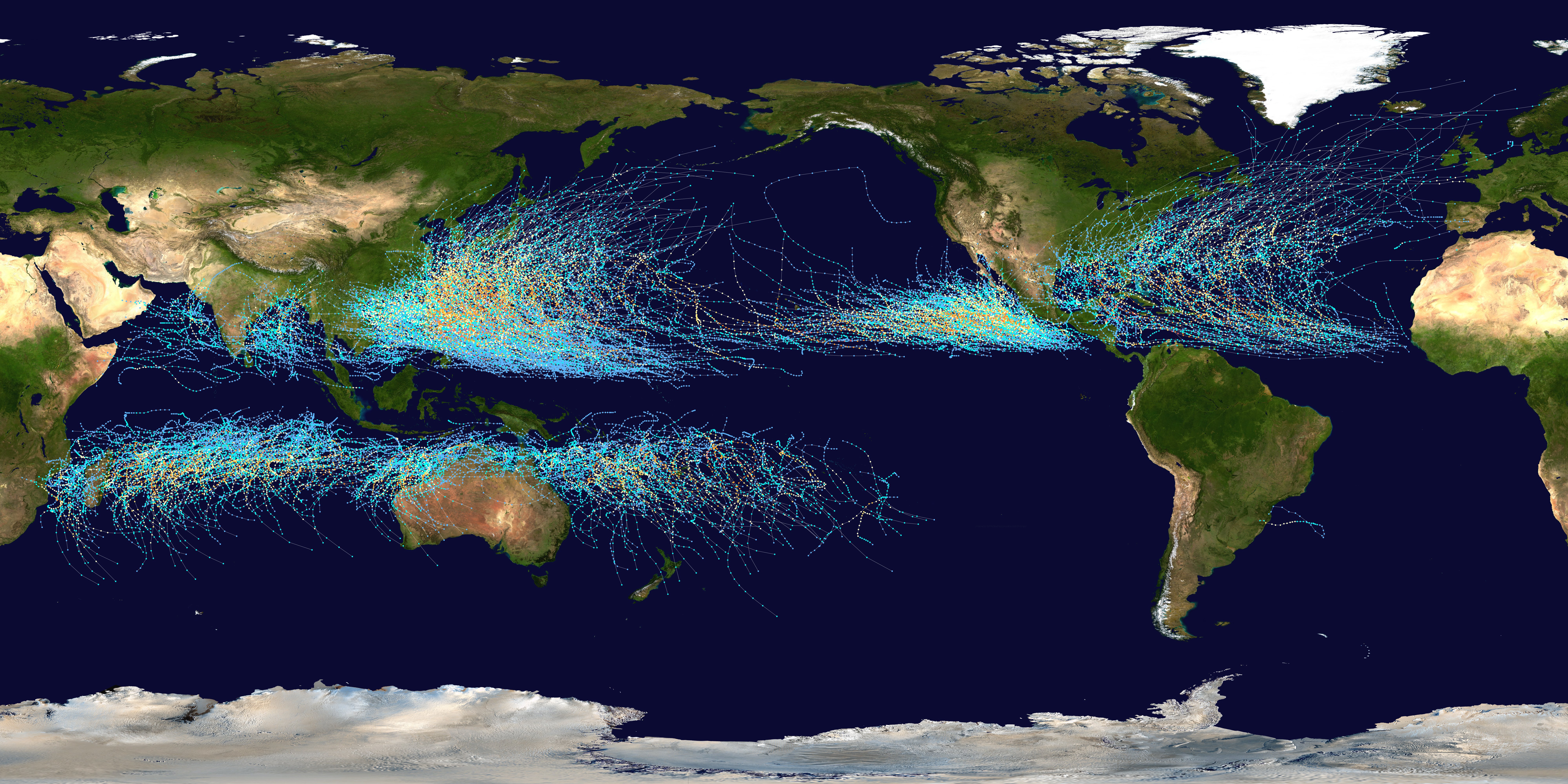
The stunningly fast buildup of what became Hurricane Humberto shocked scientists, some of whom said there was nothing like it in the historical record.
In just 18 hours, Humberto strengthened from a tropical depression with 35-mph winds to a Category 1 hurricane with 85-mph winds before crashing ashore. It did not grow into a hurricane until after midnight.
"That has never before happened" in the more than 150 years scientists have been tracking hurricanes in the Atlantic Ocean, said James Franklin, a senior specialist at the National Hurricane Center in Miami.
The only difference this time... is that it [the "traitor" rhetoric] is being directed at the side that typically wields such accusatory rhetoric, rather than by them.This is absolutely correct. Accusing Democrats not just of cowardice or dereliction of duty but of betrayal, traitorship, and treason has been a central staple of the Right's political rhetoric and energy for seventy five years (since March 4, 1933, specifically).
Because we don't know when we will die, we get to think of life as an inexhaustible well. Yet everything happens only a certain number of times, and a very small number really. How many more times will you remember a certain afternoon of your childhood, an afternoon that is so deeply a part of your being that you can't even conceive of your life without it? Perhaps four, five times more, perhaps not even that. How many more times will you watch the full moon rise? Perhaps 20. And yet it all seems limitless.It all seems limitless, but it's not. Which is why the most important thing is to keep one's own moral compass in good order every day, and without exceptions. Because soon it will all be over, and all that will matter, really, is whether you maintained that compass. And one thing I can say without the slightest equivocation is that keeping such compass was something my grandmother did as effectively as anyone I have known, and she did so without ever being sanctimonious.
Needless to say, the Murdoch outfit doesn't bother to point out that these two "revisionists" aren't really scholars, just like herbologists aren't really doctors.In Triumph Forsaken, published last year, the historian Mark Moyar claimed that South Vietnam could have survived had the Americans not acquiesced in the overthrow of President Ngo Dinh Diem in 1963, plunging the country into an “extended period of instability and weakness”.
Moyar is now working on a book about the second half of the war, in which he argues: “In the offensive of 1975, the North Vietnamese are moving around huge conventional forces that would have been pulverised by our air power.” By then, however, Hanoi was well aware that America was turning against the war and doubted that the US military would be able to act decisively.
Supporters of the Iraq war have also been delving into Lewis Sorley’s book, A Better War, which was rereleased in paperback this year. The war, Sorley wrote, “was being won on the ground even as it was being lost at the peace table and the US Congress”.
Where does Bush get this stuff from, you might well ask. Certainly, the vast majority of mainstream professional historians scoff at these views of Vietnam. The LA Times article, for example, cites Bob Dallek's sputtering reaction:"Here at home, some can argue our withdrawal from Vietnam carried no price to American credibility -- but the terrorists see things differently," Bush plans to tell a Veterans of Foreign Wars convention, according to speech excerpts released late Tuesday by the White House.
Bush will argue that the U.S. withdrawal from Vietnam had dire consequences for the people in that region and so would a withdrawal from Iraq.
"Three decades later, there is a legitimate debate about how we got into the Vietnam War and how we left," Bush will say. "Whatever your position in that debate, one unmistakable legacy of Vietnam is that the price of America's withdrawal was paid by millions of innocent citizens whose agonies would add to our vocabulary new terms like 'boat people,' 're-education camps,' and 'killing fields.'"
Dallek of course is right that what Bush is saying is arrant historical nonsense, motivated by a desire to lay political blame for the disaster on his opponents. Dallek is also right that "the disaster is the consequence of going in, not getting out." But I am afraid that these points are largely irrelevant.Historian Robert Dallek, who has written about the comparisons of Iraq to Vietnam, accused Bush of twisting history. "It just boggles my mind, the distortions I feel are perpetrated here by the president," he said in a telephone interview.
"We were in Vietnam for 10 years. We dropped more bombs on Vietnam than we did in all of World War II in every theater. We lost 58,700 American lives, the second-greatest loss of lives in a foreign conflict. And we couldn't work our will," he said.
"What is Bush suggesting? That we didn't fight hard enough, stay long enough? That's nonsense. It's a distortion," he continued.
The future will be like the past, in the sense that, no matter how amazing or technologically advanced a society becomes, the basic human rhythm of petty malevolence, sordid moneygrubbing, and official violence, illuminated by occasional bursts of loyalty or desire or tenderness, will go on.The sense that the future will be like the past, and in particular that the "backward" parts of the world offer a more realistic vision of the future than the "advanced" parts, was the basic message we tried to communicate in our course this Spring on deviant globalization.
Josh could further have further pointed out that Iraq is distracting us not just from other overt political challenges, but also from the dangers associated with massive global financial imbalances, and from emerging threats ranging from climate change to engineered biohazards. The measure of Iraq's deformation of the national dialog is not so much that the GOP candidates are falling over themselves to see who can make the most blood-curdling cry for escalation, but rather that none of the leading candidates in either party seem to have much of any foreign policy beyond some position on the so-called GWOT. It's sad, really, how much the sense of policy and political proportion has dribbled away, like a dry wadi, into the Mesopotamian sands.What is not debatable however is that there is more going on in the world -- more opportunities and more threats -- than what happens in the few hundred mile radius around the ancient capital of Baghdad. There is, as we can see, Russia, which still has a few thousand nuclear warheads which could cause some serious headaches. There's China, a vast economic and potential military power that will bulk larger and larger in our lives over the course of this century. There's Pakistan, India, half a billion people to our south speaking Spanish and Portuguese. The list goes on and on....
In hotspots around the world, there's a vacuum, as the world sort of rushes past us. In many ways this is the greatest danger in Iraq, not that our future as a nation is at stake in staying (as the right would have it) or even that it's necessarily at stake in leaving but that our engagement with the country has fixed us with a dangerous national myopia which is letting many other problems fester unattended for going on a decade.
 Photo credit: Luiz Arthur Leirão Vieira (Tuca Vieira). Hat tip: JB.

Los Angeles cleanup crews removed 27 million square feet of graffiti last year, up from 21 million square feet in 2005, officials said. In other areas of Los Angeles County, 13 million square feet of walls and other surfaces were cleaned, 4 million more than in the previous year, county public works records show.
America must remember one of the lessons of the Vietnam War. Then, as now, we fought a war with the wrong strategy for several years. And then, as now, we corrected course and began to show real progress. Many historians today believe that by about 1972 we and our South Vietnamese partners had succeeded in defeating the Vietcong insurgency and in setting South Vietnam on a path to political self-sufficiency. But America then withdrew its support, allowing the communist North to conquer the South. The consequences were dire, and not only in Vietnam: numerous deaths in places such as the killing fields of Cambodia, a newly energized and expansionist Soviet Union, and a weaker America. The consequences of abandoning Iraq would be worse.Let's take this apart sentence by sentence. I suppose few people would argue with the assertion that we fought the first years of the Vietnam War with the wrong strategy. The notion that we showed "real progress" in the early 1970s, however, is transparent nonsense. While the death rate for Americans dropped, the political legitimacy of the South Vietnamese government never came anywhere close to stability, and the carnage in the Vietnamese countryside only grew worse. Second, the North Vietnamese ability to impose political terms on Thieu in the South were only becoming more effective. Indeed, they had extracted a concession from the United States that denied South Vietnam's separate sovereignty from the North. When Thieu refused to accept this, Nixon felt compelled to commence the Christmas Bombing of North Vietnam. Rudy's ghostwriters may feel they can assert that by the early 1970s we had succeeded in defeating the North Vietnamese, but without getting into the details, suffice to say that engaging in a massive escalation in Year 7 of a war is an odd choice for a military that feels it has already won. Third, while it's true that American withdrawal of funding accelerated the collapse of the Thieu regime, the conquest of the South by the ARNV would not have happened so quickly if Thieu's regime was not politically collapsed to begin with. Fourth, the implied idea that if only we had stayed things would have turned out better for the United States ignores that dire moral impact that the heedless killing of millions of Asian peasants was having on American political culture, not to mention the fact that the price of the war was bankrupting the country. Fifth, the idea that the Soviet Union was "energized" by the U.S. defeat in Vietnam ignores already well down the path toward economic implosion that would eventually do it in, and shows the way in which the neocon right still doesn't understand that it was containment, not rollback, that won the Cold War. Sixth, the suggestion that "the killing fields of Cambodia" was part of the aftermath of our withdrawal from Vietnam carefully elides the fact that it the U.S. supported Pol Pot and the Khmer Rouge, who were responsible for those killing fields, whereas it was the Vietnamese Communists who opposed and eventually ousted Pol Pot. Finally, the notion that the consequences of leaving Iraq would be worse than those we faced after leaving Vietnam is (in addition to being bare, unsupported assertion) predicated on the (frankly, criminally insane) assumption that (a) things would have been better if we had stayed in Vietnam past 1973, and (b) that things turned out so bad for us. Wait guys, didn't we win the Cold War after we left Vietnam? Just checking.
There is six times more plastic by weight on the sea's surface than there is plankton.As my grandmother used to say, "Ca va mal finir."