The United Nations has just issued its annual Human Development Report. This one deals with the impact of climate change on human development (answer: somewhere between "really bad" and "utterly catastrophic").
I haven't read the report in detail, but the key takeaway seems to be that the authors insist that the technological and economic capacity to head off the worst of climate change's negative human impacts already exists, but that deploying this capacity will only take place if people in rich countries reflect more on "social justice and human rights across countries and generations," and commit themselves to "collective action based on shared values and a shared vision."
If that's what it's going to take to prevent the worst from happening, then I'm afraid the worst is bound to happen.
Friday, November 30, 2007


Wednesday, November 21, 2007
Seeing Bangladesh's future in Sidr's aftermath
The New York Times has a revealing piece today about the impact of Supercyclone Sidr on Bangladesh. The death toll currently stands at 3500, and is likely to rise to perhaps 10,000 -- worse than 9/11, but relative progress compared to the impact of past storms of this size in Bangladesh, such as the 1970 Bhola Cyclone, which killed upwards of half a million people, or Cyclone Gorky, which in 1991 claimed some 140,000 lives.
The fact that the immediate death toll from Sidr is an order of magnitude less than similar typhoons from the past is a testament to the effectiveness of an early warning system that has been installed, and the improved communications infrastructure throughout Bangladesh. (For example, mass text messages over cell phones warned seaside villagers to flee days in advance of the storm.)
As much as this improved warning system is to be appreciated, it does nothing to alter the calamitous underlying trend facing Bangladesh; that is: an exploding population in dire poverty in one of the most storm-vulnerable places on earth. While people are not dying in immediate droves, the economic catastrophe of the storm is worse than ever. Global warming is eroding the massive Gangeatic delta that Bangladesh straddles, and is increasing the force and perhaps likelihood of storms.
Here, in other words, is Bangladesh's future: it will receive better early warnings about threats that it can do nothing to avoid. People will pile into shelters, but how do they pick up the pieces? By 2040, the 200,000,000 Bangladeshis may become the object of a more or less continuous relief operation. The concept of "development" under these circumstances becomes something of a joke in poor taste.
The fact that the immediate death toll from Sidr is an order of magnitude less than similar typhoons from the past is a testament to the effectiveness of an early warning system that has been installed, and the improved communications infrastructure throughout Bangladesh. (For example, mass text messages over cell phones warned seaside villagers to flee days in advance of the storm.)
As much as this improved warning system is to be appreciated, it does nothing to alter the calamitous underlying trend facing Bangladesh; that is: an exploding population in dire poverty in one of the most storm-vulnerable places on earth. While people are not dying in immediate droves, the economic catastrophe of the storm is worse than ever. Global warming is eroding the massive Gangeatic delta that Bangladesh straddles, and is increasing the force and perhaps likelihood of storms.
Here, in other words, is Bangladesh's future: it will receive better early warnings about threats that it can do nothing to avoid. People will pile into shelters, but how do they pick up the pieces? By 2040, the 200,000,000 Bangladeshis may become the object of a more or less continuous relief operation. The concept of "development" under these circumstances becomes something of a joke in poor taste.
Monday, November 19, 2007
No End in Sight
Last night I watched "No End in Sight," the infuriating documentary about the catastrophe in Iraq. It's an infuriating movie at two levels, one intentional, the other not.
The intentionally infuriating aspect of the movie has to do with the central narrative, which focuses in particular on the Bush regime's complete lack of planning for the postwar situation in Iraq, and on the decisions that were made, especially by Paul Bremer and his cronies, in the early days after the fall of Baghdad. What comes across quite clearly is that the planning of the postwar was non-existent, beginning with the fateful decision not to use nearly enough troops. General Eric Shinseki, who had extensive experience from the Balkans in dealing with occupation and reconstruction efforts, was fired by Donald Rumsfeld for suggesting that it would take "several hundred thousand" troops to secure the country. With not enough troops in the country, the United States did nothing to stop the complete collapse of order in the wake of Saddam's ouster, immediately destroying US credibility as a liberator. Worst of all, the decisions to engage in radical de-baathification, which destroyed Iraq's civil service at a stroke, and to disband the Iraqi army, which immediately ended the employment of half a million armed and angry men, were made by unilaterally by Bremer (perhaps in consultation with Rumsfeld and Wolfowitz, though apparently not with Bush), without any consultation with local Iraqis, with Americans in Iraq, or with anyone who knew anything at all about occupation and reconstruction efforts. The movie argues, in effect, that these decisions precipitated the catastrophe that Iraq has become. What's most galling is not the moral anguish of those who tried to avoid these mistakes, but rather the complete insouciance of those who did make the decisions, who apparently feel not an ounce of remorse.
The unintentionally infuriating part of "No End in Sight," however, is that it subtly perpetuates the dominant narrative of what we might call the McCain-Clinton consensus on Iraq. This consensus holds that the problems the United States faces in Iraq are entirely the result of execution errors by Bush, Cheney, Rumsfeld, et al. This is the narrative that Hillary Clinton in particular has promoted (as did Kerry in 2004), since it is the only one that can justify her war authorization vote in 2002 on substantive grounds. "Yes Iraq is a catastrophe," she and others who participate in this consensus argue, "but it didn't need to have turned out that way!" While such a rationalization may be politically convenient for presidential candidates who seek the nomination of a party that has turned against this war, it is catastrophically wrong. In fact, as David Halberstam observed posthumously in the August issue of Vanity Fair:
Something close to the reverse of the argument put forth by the movie is in fact the case. There were many experts who knew full well that “punching the hornet’s nest” was likely to turn out catastrophically. The war would have been impossible to sell to the American people, Bush and Cheney knew, if an honest reckoning was made of what the postwar situation was likely to be like. The American people would most likely never have accepted the war if the President had told them what reconstruction experts were saying, namely that (at best) the war would cost a trillion dollars and require a ten year occupation of half a million troops. Those who began to suggest such things, like Shinseki, were fired.
Wolfowitz went to Congress on February 27, 2003 and told them with a straight face, "There has been a good deal of comment—some of it quite outlandish—about what our postwar requirements might be in Iraq. Some of the higher end predictions we have been hearing recently, such as the notion that it will take several hundred thousand US troops to provide stability in post-Saddam Iraq, are wildly off the mark. It is hard to conceive that it would take more forces to provide stability in post-Saddam Iraq than it would take to conduct the war itself and to secure the surrender of Saddam's security forces and his army—hard to imagine." A month later, Wolfowitz declared, "We are dealing with a country that can really finance its own reconstruction and relatively soon." These were things that had to be said in order to make the war acceptable to the American public.
Serious planning for the postwar would have revealed the absurdity and fatuity of such claims. In fact, the most charitable possible interpretation of Wolfowitz's statements (and similar ones by Rice, Rumsfeld, Cheney, Bush and countless pundits) is that they were not so much lying as intentionally trying to avoid facing the truth about the hornet's next they had already decided to punch. Serious planning for the postwar would have created such a shock as to the real expected costs, that it would have precluded the ability to wage it in the first place. What's more, who needed planning, since Saddam was just a Stalinist thug whose removal would free the Iraqi economy and society to organize and finance its own reconstruction. All of this, which is the crucial political lesson the American people need to draw from the war, "No End in Sight" does nothing to illuminate.
The real lessons that this country must learn from Iraq (for if we fail to do so, it will mean the end of American power) are realism about the limits of American power, the limitations of military force, and the need to be willing to make deals with unsavory characters if you’re going to deal with difficult parts of the world. The United States must (re)learn how to assess its geopolitical options rationally--not instinctually or ideologically. "No End in Sight" does nothing to advance these insights, and indeed perpetuates the American post-Cold War myth that the the United States can achieve imperial hegemony. Halberstam gets to the nub of the issue in understanding that behind the poor decisions of the Bush administration lies a fundamental misapprehension of recent history, and in particular, the meaning of the end of the Cold War:
The intentionally infuriating aspect of the movie has to do with the central narrative, which focuses in particular on the Bush regime's complete lack of planning for the postwar situation in Iraq, and on the decisions that were made, especially by Paul Bremer and his cronies, in the early days after the fall of Baghdad. What comes across quite clearly is that the planning of the postwar was non-existent, beginning with the fateful decision not to use nearly enough troops. General Eric Shinseki, who had extensive experience from the Balkans in dealing with occupation and reconstruction efforts, was fired by Donald Rumsfeld for suggesting that it would take "several hundred thousand" troops to secure the country. With not enough troops in the country, the United States did nothing to stop the complete collapse of order in the wake of Saddam's ouster, immediately destroying US credibility as a liberator. Worst of all, the decisions to engage in radical de-baathification, which destroyed Iraq's civil service at a stroke, and to disband the Iraqi army, which immediately ended the employment of half a million armed and angry men, were made by unilaterally by Bremer (perhaps in consultation with Rumsfeld and Wolfowitz, though apparently not with Bush), without any consultation with local Iraqis, with Americans in Iraq, or with anyone who knew anything at all about occupation and reconstruction efforts. The movie argues, in effect, that these decisions precipitated the catastrophe that Iraq has become. What's most galling is not the moral anguish of those who tried to avoid these mistakes, but rather the complete insouciance of those who did make the decisions, who apparently feel not an ounce of remorse.
The unintentionally infuriating part of "No End in Sight," however, is that it subtly perpetuates the dominant narrative of what we might call the McCain-Clinton consensus on Iraq. This consensus holds that the problems the United States faces in Iraq are entirely the result of execution errors by Bush, Cheney, Rumsfeld, et al. This is the narrative that Hillary Clinton in particular has promoted (as did Kerry in 2004), since it is the only one that can justify her war authorization vote in 2002 on substantive grounds. "Yes Iraq is a catastrophe," she and others who participate in this consensus argue, "but it didn't need to have turned out that way!" While such a rationalization may be politically convenient for presidential candidates who seek the nomination of a party that has turned against this war, it is catastrophically wrong. In fact, as David Halberstam observed posthumously in the August issue of Vanity Fair:
It is hard for me to believe that anyone who knew anything about Vietnam, or for that matter the Algerian war, which directly followed Indochina for the French, couldn't see that going into Iraq was, in effect, punching our fist into the largest hornet's nest in the world. As in Vietnam, our military superiority is neutralized by political vulnerabilities. The borders are wide open. We operate quite predictably on marginal military intelligence. The adversary knows exactly where we are at all times, as we do not know where he is. Their weaponry fits an asymmetrical war, and they have the capacity to blend into the daily flow of Iraqi life, as we cannot. Our allies—the good Iraqi people the president likes to talk about—appear to be more and more ambivalent about the idea of a Christian, Caucasian liberation, and they do not seem to share many of our geopolitical goals.As Small Precautions has argued for years, in fact the real miracle is that things didn’t turn out worse in Iraq than they have (though they may).
Something close to the reverse of the argument put forth by the movie is in fact the case. There were many experts who knew full well that “punching the hornet’s nest” was likely to turn out catastrophically. The war would have been impossible to sell to the American people, Bush and Cheney knew, if an honest reckoning was made of what the postwar situation was likely to be like. The American people would most likely never have accepted the war if the President had told them what reconstruction experts were saying, namely that (at best) the war would cost a trillion dollars and require a ten year occupation of half a million troops. Those who began to suggest such things, like Shinseki, were fired.
Wolfowitz went to Congress on February 27, 2003 and told them with a straight face, "There has been a good deal of comment—some of it quite outlandish—about what our postwar requirements might be in Iraq. Some of the higher end predictions we have been hearing recently, such as the notion that it will take several hundred thousand US troops to provide stability in post-Saddam Iraq, are wildly off the mark. It is hard to conceive that it would take more forces to provide stability in post-Saddam Iraq than it would take to conduct the war itself and to secure the surrender of Saddam's security forces and his army—hard to imagine." A month later, Wolfowitz declared, "We are dealing with a country that can really finance its own reconstruction and relatively soon." These were things that had to be said in order to make the war acceptable to the American public.
Serious planning for the postwar would have revealed the absurdity and fatuity of such claims. In fact, the most charitable possible interpretation of Wolfowitz's statements (and similar ones by Rice, Rumsfeld, Cheney, Bush and countless pundits) is that they were not so much lying as intentionally trying to avoid facing the truth about the hornet's next they had already decided to punch. Serious planning for the postwar would have created such a shock as to the real expected costs, that it would have precluded the ability to wage it in the first place. What's more, who needed planning, since Saddam was just a Stalinist thug whose removal would free the Iraqi economy and society to organize and finance its own reconstruction. All of this, which is the crucial political lesson the American people need to draw from the war, "No End in Sight" does nothing to illuminate.
The real lessons that this country must learn from Iraq (for if we fail to do so, it will mean the end of American power) are realism about the limits of American power, the limitations of military force, and the need to be willing to make deals with unsavory characters if you’re going to deal with difficult parts of the world. The United States must (re)learn how to assess its geopolitical options rationally--not instinctually or ideologically. "No End in Sight" does nothing to advance these insights, and indeed perpetuates the American post-Cold War myth that the the United States can achieve imperial hegemony. Halberstam gets to the nub of the issue in understanding that behind the poor decisions of the Bush administration lies a fundamental misapprehension of recent history, and in particular, the meaning of the end of the Cold War:
What went wrong in the current administration, not just in the immediate miscalculation of Iraq but in the larger sense of misreading the historical moment we now live in. It is that the president and the men around him—most particularly the vice president—simply misunderstood what the collapse of the Soviet empire meant for America in national-security terms. Rumsfeld and Cheney are genuine triumphalists. Steeped in the culture of the Cold War and the benefits it always presented to their side in domestic political terms, they genuinely believed that we were infinitely more powerful as a nation throughout the world once the Soviet empire collapsed.
Wednesday, November 07, 2007
Break Through
I had the pleasure last week of attending a talk by Ted Nordhaus and Michael Schellenberger, the authors of what may be the most significant book on environmentalism of the last several years, Break Through: From the Death of Environmentalism to the Politics of Possibility. Their argument, in a nutshell, is that American environmentalism's main mode of discourse, namely catastrophism, is fundamentally counterproductive since it causes people to despair and turn inward, and that therefore if we want to actually galvanize people to take action on environmental matters, we need to stop talking as if there is an unbreakable choice between environmental catastrophe and limited growth.
Their views on this have been shaped by years of polling research in many countries, and above all in North America, which has convinced them that the way the American environmental movement has gone about its business since the 1970s has been worse that ineffective. As a simple matter of political rhetoric, I think their argument is not only profound, but virtually unimpeachable. Americans never have and never will respond politically to be being told they are sinners who must repent, in this case, from the sin of consumerism. Even more, the Chinese will never accept that they too should restrain their growth, as if freezing the current wealth levels of different countries is remotely fair.
I chatted briefly with Michael after the talk, and handed him my paper, which he had some kind words about on his blog yesterday:
If I have a criticism of Nordhaus and Schellenberger, it is not on the substantive matter of how the politics of environmentalism should be framed. I agree strongly with them that environmentalism is most likely to succeed as a political matter if it is not positioned as a matter of restriction, but rather as an opportunity. Nor do I disagree in the slightest that from a policy perspective, it would be fantastic for the US federal government to initiate a major push to create infrastructure that can provide a "platform for green innovation" (modeled after, for example, the federal investment in the Tennessee Valley Authority in the 1930s-40s, the Interstate system in the 1950s-60s, or the Internet in the 1970s-1980s) -- which would provide enormous business opportunities. Finally, I also agree that any viable solution to the global warming challenge must include a calculus for how we can get the rest of the world rich, too. If the solution requires keeping the Indians and Chinese down, it won't work.
Rather, what I disagree with them about is whether what they propose, even if seized upon by a visionary politician who sells it to the American and global public, can happen fast enough to save the planet from environmental catastrophe. Embedded in their work is a faith in the Environmental Kuznets Curve (EKC), that is, the idea that environmental values begin to appear as people hit a certain level of income. They seem to argue that with better framing of the political discourse, we may be able to bring down the price point at which people begin to value more environmentally-friendly policies and consumer habits. There are three main criticisms of the EKC idea. First, it's not clear that people actually do value environmentally-friendly policies as they get richer -- it's just clear that they start to insist that these polluting industries get moved overseas. Yes, the Taiwanese cleaned up as they got wealthier, but they did so by shipping their nastiest facotires across the Straits to China. The Chinese really have no such option, and in any event, even if they did, it wouldn't reduce the global pollutant load for them to do so as they got richer. Second, it seems that the income-threshold at which people start to care about greenhouse gas emissions may be somewhere around $75K per family. Needless to say, China's nowhere close to that, and the amount of pollution it will emit before it gets there is staggering, and likely catastrophic at a planetary level. Third, and most profoundly, the theory of the EKC rests on a general theory of modernization, and specifically on the notion that modernization spells convergence in terms of political values. Readers of this blog probably don't need to be told how skeptical I am of such theories, in particular the idea that people's social and political values are somehow a dependent variable in relation to their economic status, or that political liberalism is the foreordained outcome of the modernization process.
With that said, I think the Nordhaus and Schellenberger have written a great book, one that points the right way forward, even if it may not be enough to save us.
Their views on this have been shaped by years of polling research in many countries, and above all in North America, which has convinced them that the way the American environmental movement has gone about its business since the 1970s has been worse that ineffective. As a simple matter of political rhetoric, I think their argument is not only profound, but virtually unimpeachable. Americans never have and never will respond politically to be being told they are sinners who must repent, in this case, from the sin of consumerism. Even more, the Chinese will never accept that they too should restrain their growth, as if freezing the current wealth levels of different countries is remotely fair.
I chatted briefly with Michael after the talk, and handed him my paper, which he had some kind words about on his blog yesterday:
Gilman, Doug Randall, and Peter Schwartz come to very similar conclusions about how the political reactions to climate change might divide the environmental community, just as immigration reform and Cape Wind divided the Sierra Club.I think that critique of our work from last year is fair. We could have sharpened the analysis by suggesting that political discourses themselves are semi-independent variables that help determine political outcomes. One thing I learned from Nordhaus and Schellenberger is that an important indicator to watch for is the optimism or pessimism of the political narrative about climate. (People have been ignoring jeremiads since, well, Jeremiah.)[C]limate change may form the basis for a new set of political coalitions and oppositions that do not fit within the [traditional left-right] political paradigm. One possibility is that political coalitions and parties may be reformed around different attitudes to social risk-sharing, with one faction opting for having the state take an activist approach to mitigating a variety of "big" security risks (military, terrorist, environmental) and another coalition forming around allowing people to fend for themselves, with a less intrusive but also less protective state. The recent debate in the Sierra Club over the organization's stance on immigration presages such a formation, as does the current debate in Europe about "repatriation" of immigrants.The initial reaction from some people to Break Through was that we constructed a straw man, as though to say, Come on, there's hardly any environmentalists any more who are anti-growth, limits-based, NIMBY, or anti-immigrant.
These claims were often followed, without any apparent sense of irony, by the insistence that technology can't solve our problems, there are natural limits to economic growth, and there's not enough room on lifeboat Earth for everyone to live the way we live in the developed world.
Having spent the last month traveling around the country on book tour, Ted and I have been struck that the biggest objection audiences have to our book is our contention that there's room for all 7 billion of us Earthlings to live prosperous, free and fulfilled lives. We point out that this won't be the case if we continue on the current fossil fuel trajectory -- hence the need for a politics that gets us off it -- but if we move to a clean energy economy, live mostly in cities, and begin to restore the nonhuman ecosystems we depend on, there's no reason to believe the levels of prosperity we enjoy shouldn't be achieved by everyone.
Ever since Malthus in the early 19th Century (and likely well before that) people have been predicting that we're going to run out of food. Their calculations are always impeccable. The problem is that they're based on existing technologies. And technological innovation is what our species excels at.
The new political fault line we see shaping up is between a large politics (what we call "greatness") characterized by a vision for growth, development, globalization, and non-zero sum thinking (i.e., "win-win") -- and a small politics characterized by NIMBYism, anti-immigrant attitudes, the resistance to what GBN calls "social risk-sharing," and the sense that there's only so much planet Earth to go around.
Which side will prevail? GBN says it's uncertain. "While ecosystems have always been dynamic and changing (and subject to collapse), the scientific ability to track such collapses, and the media visibility of such collapses, is far greater than it has ever been. How the global public will react to such collapses is largely unknown."
GBN makes the very good point that as human systems collapse, humans "rely upon primary loyalties (families, neighborhoods, religious organizations, gangs) for daily survival.... Those unwilling or unable to profit from the chaos will radiate outward through refugee flows, exporting social conflicts to adjacent locales."
What I thought was missing from the GBN analysis was an acknowledgment of the fairly extensive research of how discourses of collapse and apocalypse feed the small, authoritarian, and NIMBY political reaction -- not the expansive, democratic, and ecological one.
If I have a criticism of Nordhaus and Schellenberger, it is not on the substantive matter of how the politics of environmentalism should be framed. I agree strongly with them that environmentalism is most likely to succeed as a political matter if it is not positioned as a matter of restriction, but rather as an opportunity. Nor do I disagree in the slightest that from a policy perspective, it would be fantastic for the US federal government to initiate a major push to create infrastructure that can provide a "platform for green innovation" (modeled after, for example, the federal investment in the Tennessee Valley Authority in the 1930s-40s, the Interstate system in the 1950s-60s, or the Internet in the 1970s-1980s) -- which would provide enormous business opportunities. Finally, I also agree that any viable solution to the global warming challenge must include a calculus for how we can get the rest of the world rich, too. If the solution requires keeping the Indians and Chinese down, it won't work.
Rather, what I disagree with them about is whether what they propose, even if seized upon by a visionary politician who sells it to the American and global public, can happen fast enough to save the planet from environmental catastrophe. Embedded in their work is a faith in the Environmental Kuznets Curve (EKC), that is, the idea that environmental values begin to appear as people hit a certain level of income. They seem to argue that with better framing of the political discourse, we may be able to bring down the price point at which people begin to value more environmentally-friendly policies and consumer habits. There are three main criticisms of the EKC idea. First, it's not clear that people actually do value environmentally-friendly policies as they get richer -- it's just clear that they start to insist that these polluting industries get moved overseas. Yes, the Taiwanese cleaned up as they got wealthier, but they did so by shipping their nastiest facotires across the Straits to China. The Chinese really have no such option, and in any event, even if they did, it wouldn't reduce the global pollutant load for them to do so as they got richer. Second, it seems that the income-threshold at which people start to care about greenhouse gas emissions may be somewhere around $75K per family. Needless to say, China's nowhere close to that, and the amount of pollution it will emit before it gets there is staggering, and likely catastrophic at a planetary level. Third, and most profoundly, the theory of the EKC rests on a general theory of modernization, and specifically on the notion that modernization spells convergence in terms of political values. Readers of this blog probably don't need to be told how skeptical I am of such theories, in particular the idea that people's social and political values are somehow a dependent variable in relation to their economic status, or that political liberalism is the foreordained outcome of the modernization process.
With that said, I think the Nordhaus and Schellenberger have written a great book, one that points the right way forward, even if it may not be enough to save us.
Tuesday, October 30, 2007
5 catastrophe scenarios for the US economy
New York magazine has a pretty dire reading of how the US economy could go down in flames. People will call it a black swan when it happens, but it's anything but. The funniest bit is this:
The bulls will tell you that foreign governments understand the American economy is the key to global economic health, and that they'll suck it up and take it when we devalue their debt. To which Schiff offers another analogy. Imagine if five people were washed up on a desert island: four Asians and an American. In splitting up their duties, one Asian says he'll fish; another will hunt, another will look for firewood, and another will cook. The American assigns himself the job of eating.
"The modern economist looks at this situation and says the American is key to the whole thing," says Schiff. "Because without him to eat, the four Asians would be unemployed."
Friday, October 26, 2007
Black Swans of the Future
Over at Global Guerillas, John Robb has some interesting comments about global security and peak oil. But he kinda wound me up this morning with his off-the-cuff suggestion that the current mortgage crisis exhibits all the hallmarks of a black swan (that is, an event that defies prediction, but it is usually obvious in hindsight):
What other future alleged Black Swans can we debunk in advance? Let me put on the record some other big, bad events that we can already see coming, and that no one ought to get away with acting shocked about when they do:
* A rapid, messy collapse in the US dollar
* A major inflationary episode in China
* A major global recession, deepened by populist anti-trade reactions
* The detonation of a nuclear device in a major global port
* All four of the above simultaneously....
When these things happen, some people will be tempted to call them Black Swans. They will base that claim narrowly, citing the particular way the event was precipitated, and the fact that certain smart were caught with their pants down, as "proof" that the event in question was "unpredictable."
But as overall categories of happening, I think these -- like the long-predicted popping of the housing bubble -- are not black swans, but more like "inevitable surprises." The particular way in which the event will come about will be unpredictable and revealing of mass complacency, but the chance that at least one of these events will take place in the next decade strikes me as better than even. In fact, the wonder with all of those events is that they haven't happened already. Of course they'll take people by surprise when they happen, but that doesn't mean they are surprising in the stricter epistemological sense that Taleb uses the term "Black Swan."
Bottom line: Just because the public or some individual is complacent, doesn't mean that the bad stuff that happens to them was a Black Swan.
The financial carnage -- hedge fund failures, bank runs, credit tightening, and potentially a recession -- due to the current mortgage crisis demonstrates (yet again) that very smart people can do incredibly stupid things. For all of the insight, experience, and knowledge we gained through previous financial failures, we still walked blithely into the gaping maw of the delinquencies, defaults, and outsized bailouts that characterize a financial black swan.I think this is a total misreading of the current mortgage situation. In fact, many people over the last few years have observed -- often in the same breath -- that (1) the relaxation of credit terms for the poor invariably winds up in a credit crisis, and (2) the global housing market was exhibiting every sign of a bubble. The only thing that might arguably have been a surprise is how badly people had priced the CDOs, and how illiquid the markets for these vehicles were. (Even that was pretty obvious to the folks involved in creating those products.) That's the triple play that led to this summer's financial crisis: lax credit terms for the poor, a housing bubble, and untested financialization. Anyone could have -- and a lot of people did -- predict that this mix was unlikely to have a happy ending. So, let's not call it a black swan when what we have here instead is the classic American mix of privatization of profit and socialization of costs. The charade of acting like all this was unpredictable is simply a ruse to make the bailout of bankers politically palatable.
What other future alleged Black Swans can we debunk in advance? Let me put on the record some other big, bad events that we can already see coming, and that no one ought to get away with acting shocked about when they do:
* A rapid, messy collapse in the US dollar
* A major inflationary episode in China
* A major global recession, deepened by populist anti-trade reactions
* The detonation of a nuclear device in a major global port
* All four of the above simultaneously....
When these things happen, some people will be tempted to call them Black Swans. They will base that claim narrowly, citing the particular way the event was precipitated, and the fact that certain smart were caught with their pants down, as "proof" that the event in question was "unpredictable."
But as overall categories of happening, I think these -- like the long-predicted popping of the housing bubble -- are not black swans, but more like "inevitable surprises." The particular way in which the event will come about will be unpredictable and revealing of mass complacency, but the chance that at least one of these events will take place in the next decade strikes me as better than even. In fact, the wonder with all of those events is that they haven't happened already. Of course they'll take people by surprise when they happen, but that doesn't mean they are surprising in the stricter epistemological sense that Taleb uses the term "Black Swan."
Bottom line: Just because the public or some individual is complacent, doesn't mean that the bad stuff that happens to them was a Black Swan.
U.S. housing slump = disaster for Mexican economy
Here is an important and underreported story: the housing slump in the U.S. is causing economic catastrophe in Mexico.
Housing starts have long considered the best single indicator of future economic growth -- it employs a bunch of people, who cycle money through the economy, and it creates a lot of demand for building materials, which has multiplier effects on the wider economy. (It's also a harbinger of inflationary pressure.) All this has led people to ask, "How is it that a collapse in the construction industry over the last year, brought on by the popping of the housing bubble, hasn't rippled out to the rest of the economy?"
Well, the article above provides a partial answer to the mystery. It turns out that the construction slump has rippled out to the rest of the economy -- it's just that "the rest of the economy" is in Mexico. The reasoning goes like this: Mexicans (legal and otherwise) overwhelming dominate the rank and file of building trade in the United States. These construction workers never spent more than the minimum necessary here to keep body and soul together, and instead remitted as much money as possible back home to Mexico. As the construction workers have lost work, they've stopped sending remittances home, with disastrous consequences in Mexico. However, they still have to spend the minimum here in the U.S. to keep themselves together, and so the collapse has had little impact on US consumer demand. To put it a little more technically: all the marginal consumer-side costs of the U.S. construction slump are being felt in Mexico, not in the U.S.
This helps explain half the mystery of why the construction slump hasn't hurt the economy more -- the consumer-side part of the story. The part that's still a mystery, however, is why the construction slump isn't causing more of a collapse in supplier industries (metals, concrete, electrical cable, Home Depot, etc).
Housing starts have long considered the best single indicator of future economic growth -- it employs a bunch of people, who cycle money through the economy, and it creates a lot of demand for building materials, which has multiplier effects on the wider economy. (It's also a harbinger of inflationary pressure.) All this has led people to ask, "How is it that a collapse in the construction industry over the last year, brought on by the popping of the housing bubble, hasn't rippled out to the rest of the economy?"
Well, the article above provides a partial answer to the mystery. It turns out that the construction slump has rippled out to the rest of the economy -- it's just that "the rest of the economy" is in Mexico. The reasoning goes like this: Mexicans (legal and otherwise) overwhelming dominate the rank and file of building trade in the United States. These construction workers never spent more than the minimum necessary here to keep body and soul together, and instead remitted as much money as possible back home to Mexico. As the construction workers have lost work, they've stopped sending remittances home, with disastrous consequences in Mexico. However, they still have to spend the minimum here in the U.S. to keep themselves together, and so the collapse has had little impact on US consumer demand. To put it a little more technically: all the marginal consumer-side costs of the U.S. construction slump are being felt in Mexico, not in the U.S.
This helps explain half the mystery of why the construction slump hasn't hurt the economy more -- the consumer-side part of the story. The part that's still a mystery, however, is why the construction slump isn't causing more of a collapse in supplier industries (metals, concrete, electrical cable, Home Depot, etc).
Monday, October 08, 2007

Thursday, October 04, 2007

Saturday, September 22, 2007
What would the French say?
I was driving along a road in northern Virginia on Thursday when I saw this giant political advertisement, which pretty much sums up what the Republicans have done to the country for the last six years: In case you think this is a joke, here's this guy's campaign site.
If this posting makes no sense to you, this link may help.
 In case you think this is a joke, here's this guy's campaign site.
If this posting makes no sense to you, this link may help.
Tuesday, September 18, 2007
Comando Vermelho video
A great video on one of the gangs in the Rio de Janiero slums that is directly challenging the police power of the state.
Money line: "First is God, then my gun."
Money line: "First is God, then my gun."
Sunday, September 16, 2007
Arctic sea ice update
It's the end of the summer in the Arctic, and guess what? Sea ice is a third lower than ever before recorded. But you know what they say: in every crisis, an opportunity.
Thursday, September 13, 2007
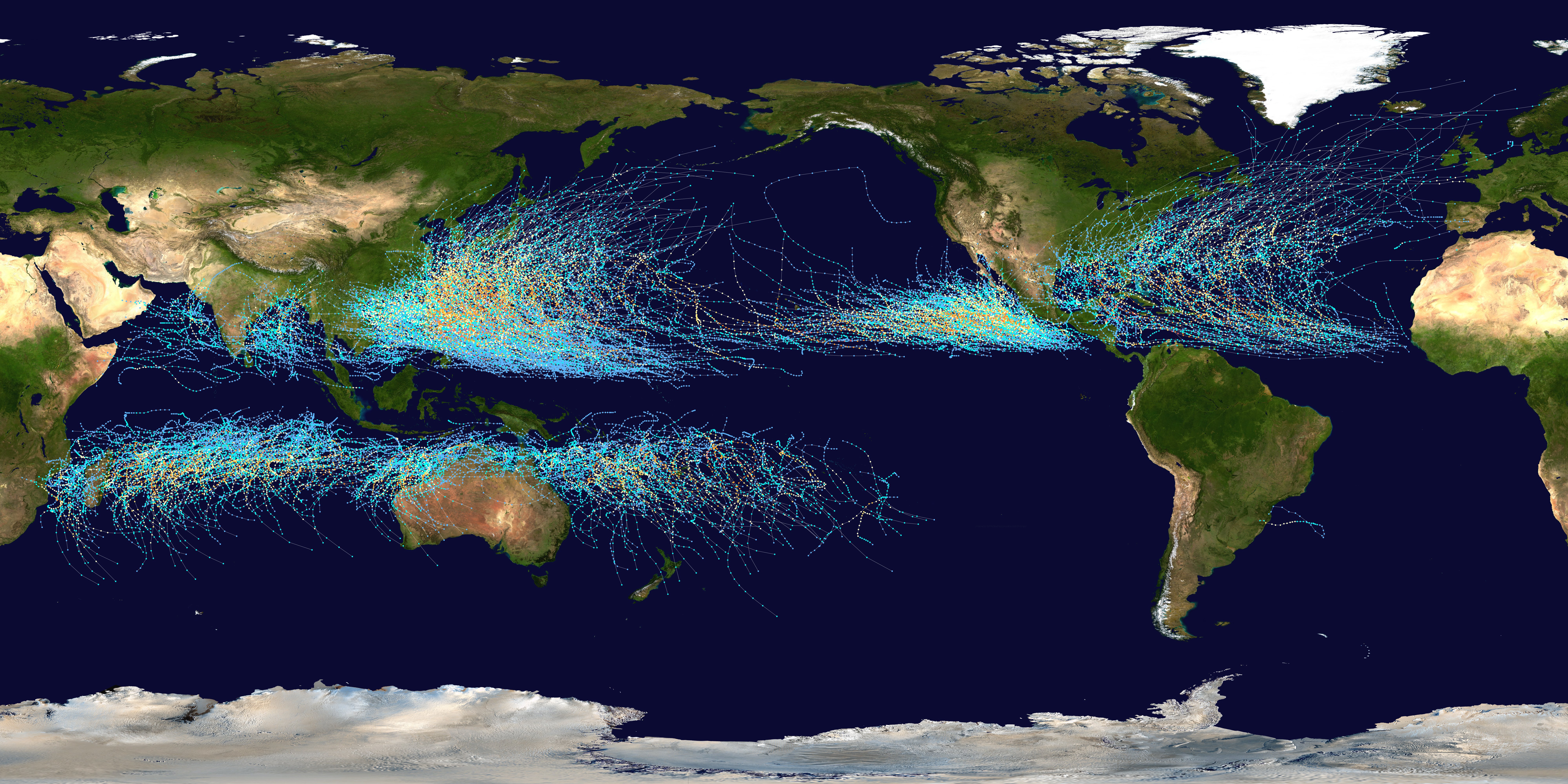
Hurricane Humberto
Hurricane Humberto isn't making much news, because it's only a Category 1 storm, and it's not expected to cause all that much damage. But there's a wrinkly to the Humberto story that's worth paying attention to:
Texans went to bed Wednesday night expecting to be struck by a tropical storm. They awoke to find they'd been hit by a hurricane instead."That's never before happened...": words worth thinking about. The truth is that the consequences of such a rapid warming as we are imposing on the planet via GHG emissions are really unknown. All sorts of things that are "outside the realm of the possible" within current climate models are going to happen.
The stunningly fast buildup of what became Hurricane Humberto shocked scientists, some of whom said there was nothing like it in the historical record.
In just 18 hours, Humberto strengthened from a tropical depression with 35-mph winds to a Category 1 hurricane with 85-mph winds before crashing ashore. It did not grow into a hurricane until after midnight.
"That has never before happened" in the more than 150 years scientists have been tracking hurricanes in the Atlantic Ocean, said James Franklin, a senior specialist at the National Hurricane Center in Miami.
Wednesday, September 12, 2007
Who are the real "traitors"?
Glenn Greenwald has an acute column up about the MoveOn advert that rhymes General Petreaus's name with "Betray Us," in which he points out the deep hypocrisy of those on the right who claim it is outrageous to use such a word.
But ask yourself: who is the real traitor: the person who sees that the country has only bad choices before it, acknowledges this, and is willing to make the painful and difficult decision? Or the person who insists on continuing to squander the blood of young Americans, the fortunes of our treasury, and the ability of the country to act in its own interests in other arenas -- merely to retain a prayer of salvaging his own personal reputation?
I tend to agree with Juan Cole that Petreaus is a good soldier stuck in a terrible position, trying to salvage a disaster. With that said, I think it is not wrong to call his political masters in the White House (and the GOP generally) traitors. They are traitors, that is, if by "traitor" we understand someone who knowingly betrays the interests of his country in order to promote his own interests.
At this point only a knave or a fool would fail to realize that staying on in Iraq is contrary to the national interest. The only reason that Bush and the GOP continue to do so is to retain hope that their political reputation can be salvaged. And that, I believe, can rightly be called treasonous.
The only difference this time... is that it [the "traitor" rhetoric] is being directed at the side that typically wields such accusatory rhetoric, rather than by them.This is absolutely correct. Accusing Democrats not just of cowardice or dereliction of duty but of betrayal, traitorship, and treason has been a central staple of the Right's political rhetoric and energy for seventy five years (since March 4, 1933, specifically).
But ask yourself: who is the real traitor: the person who sees that the country has only bad choices before it, acknowledges this, and is willing to make the painful and difficult decision? Or the person who insists on continuing to squander the blood of young Americans, the fortunes of our treasury, and the ability of the country to act in its own interests in other arenas -- merely to retain a prayer of salvaging his own personal reputation?
I tend to agree with Juan Cole that Petreaus is a good soldier stuck in a terrible position, trying to salvage a disaster. With that said, I think it is not wrong to call his political masters in the White House (and the GOP generally) traitors. They are traitors, that is, if by "traitor" we understand someone who knowingly betrays the interests of his country in order to promote his own interests.
At this point only a knave or a fool would fail to realize that staying on in Iraq is contrary to the national interest. The only reason that Bush and the GOP continue to do so is to retain hope that their political reputation can be salvaged. And that, I believe, can rightly be called treasonous.
Tuesday, August 28, 2007
The oblique nature of the impact of climate change
One of the things I've hammered on about this year regarding the impact of climate change is how many of the impacts of climate change will not be reported in the newspaper as impacts of climate change, but rather as political or social crises. In fact, there has even been an explicit push to stop people from even trying to connect political crises to climate change. When UN Secretary General Ban Moon-Ki argued in June (citing the arguments my friend Stephan Faris made in the Atlantic Monthly last year) that climate change was exacerbating resource conflicts in Darfur that drive the slaughter going on there, Idean Salehyan shot back in Foreign Policy that blaming the situation in Darfur on climate change in effect was letting the politicians in Khartoum off the hook. You can judge Salehyan's arguments on their merits, but what is certain is that insofar as people embrace his perspective that proximate political causes should always have explanatory and moral priority over background long duree causal factors like climate change, it will be impossible to really create any political consensus about the impact of climate change.
As I was trying to figure out why this is so, it occurred to me that the impact of climate change can perhaps best be thought of as an inversion of the genius marketing slogan of the chemical company BASF: "We don't make a lot of the products you buy. We make a lot of the products you buy better." In the case of climate change, you might say, "Climate change doesn't make problems. It makes a lot of the problems you have worse." And that seems to about right for describing the impact of climate change in Darfur, and also underscores why climate change, short of the most catastrophic scenarios, is unlikely to be a big problem in places which are otherwise politically, socially, and economically healthy. In places that are already stressed, however, climate change will ratchet up the leverage, and in some instances will function as the proverbial last straw, precipitating political, social, and economic collapses, that will be reported as such.
As I was trying to figure out why this is so, it occurred to me that the impact of climate change can perhaps best be thought of as an inversion of the genius marketing slogan of the chemical company BASF: "We don't make a lot of the products you buy. We make a lot of the products you buy better." In the case of climate change, you might say, "Climate change doesn't make problems. It makes a lot of the problems you have worse." And that seems to about right for describing the impact of climate change in Darfur, and also underscores why climate change, short of the most catastrophic scenarios, is unlikely to be a big problem in places which are otherwise politically, socially, and economically healthy. In places that are already stressed, however, climate change will ratchet up the leverage, and in some instances will function as the proverbial last straw, precipitating political, social, and economic collapses, that will be reported as such.
Saturday, August 25, 2007
Anne-Louise, 1923-2007
My grandmother died today, or maybe it was tomorrow, I don't know.
The last time I saw her was in 2005 in Copenhagen. I saw her half a dozen times since I moved back from Europe ten years ago, and I was acutely conscious every time I departed from her that this was very possibly going to be the last time I would see her, and I tried for that reason to make a mental image of the moment. So the last time was at her flat, overlooking the Oresund, and we sat and had tea and talked about my children and my work. She quickly became tired, so I had to go.
It's self-indulgent to feel existential when someone close to you dies. Or perhaps the self-indulgence of the existentialists was to go around cultivating as a constant personal style that feeling you have when someone close to you dies. Still, the existentialists have all the good quotes that describe the feeling of limitation that death brings home, and also the struggle to deny those limitations. One of my favorite expressions of this, which for some reason came to me today, is from Paul Bowles's The Sheltering Sky:
Requiescat in pace, Mormor.
The last time I saw her was in 2005 in Copenhagen. I saw her half a dozen times since I moved back from Europe ten years ago, and I was acutely conscious every time I departed from her that this was very possibly going to be the last time I would see her, and I tried for that reason to make a mental image of the moment. So the last time was at her flat, overlooking the Oresund, and we sat and had tea and talked about my children and my work. She quickly became tired, so I had to go.
It's self-indulgent to feel existential when someone close to you dies. Or perhaps the self-indulgence of the existentialists was to go around cultivating as a constant personal style that feeling you have when someone close to you dies. Still, the existentialists have all the good quotes that describe the feeling of limitation that death brings home, and also the struggle to deny those limitations. One of my favorite expressions of this, which for some reason came to me today, is from Paul Bowles's The Sheltering Sky:
Because we don't know when we will die, we get to think of life as an inexhaustible well. Yet everything happens only a certain number of times, and a very small number really. How many more times will you remember a certain afternoon of your childhood, an afternoon that is so deeply a part of your being that you can't even conceive of your life without it? Perhaps four, five times more, perhaps not even that. How many more times will you watch the full moon rise? Perhaps 20. And yet it all seems limitless.It all seems limitless, but it's not. Which is why the most important thing is to keep one's own moral compass in good order every day, and without exceptions. Because soon it will all be over, and all that will matter, really, is whether you maintained that compass. And one thing I can say without the slightest equivocation is that keeping such compass was something my grandmother did as effectively as anyone I have known, and she did so without ever being sanctimonious.
Requiescat in pace, Mormor.
Times gets my story, two days later
Following on my posting from three days ago, the Times of London, a Rupert Murdoch outfit, explains the "revisionism" that lies behinds Bush's claims about Vietnam. It's Sorley and Moyar alright, as well as their various readers in Bush regime. Money:
The thing to understand about these sorts of "revisionists" is that they start with a contemporary political axe to grind, and then go find a historical "revision" to make that will support that contemporary political agenda. That doesn't make their claims about the past necessarily wrong, but it does mean that they are going into the research inclined to cherry-pick evidence in order to support their thesis -- a thesis motivated not by an understanding of the past en soi, but rather by contemporary political concerns.
Needless to say, the Murdoch outfit doesn't bother to point out that these two "revisionists" aren't really scholars, just like herbologists aren't really doctors.In Triumph Forsaken, published last year, the historian Mark Moyar claimed that South Vietnam could have survived had the Americans not acquiesced in the overthrow of President Ngo Dinh Diem in 1963, plunging the country into an “extended period of instability and weakness”.
Moyar is now working on a book about the second half of the war, in which he argues: “In the offensive of 1975, the North Vietnamese are moving around huge conventional forces that would have been pulverised by our air power.” By then, however, Hanoi was well aware that America was turning against the war and doubted that the US military would be able to act decisively.
Supporters of the Iraq war have also been delving into Lewis Sorley’s book, A Better War, which was rereleased in paperback this year. The war, Sorley wrote, “was being won on the ground even as it was being lost at the peace table and the US Congress”.
The thing to understand about these sorts of "revisionists" is that they start with a contemporary political axe to grind, and then go find a historical "revision" to make that will support that contemporary political agenda. That doesn't make their claims about the past necessarily wrong, but it does mean that they are going into the research inclined to cherry-pick evidence in order to support their thesis -- a thesis motivated not by an understanding of the past en soi, but rather by contemporary political concerns.
Friday, August 24, 2007
Wednesday, August 22, 2007
The Vietnam/Iraq analogy and the historical profession
Bush operatives are announcing that the President plans to make a major foreign policy speech next week in which he will, like Giuliani in last month's Foreign Affairs, claim that the lesson of the Vietnam War for today's war in Iraq is that we must stay the course:
What's critical here is that Bush is drawing his history not from the professional historians, but from an alternative, parallel universe of historical knowledge. Specifically, the two works that lie in the background to Bush's "lessons of Vietnam" are A Better War: The Unexamined Victories and Final Tragedy of America's Last Years in Vietnam by Lewis Sorley, whose job is as a Member of Board of Governors at the Reagan Ranch; and Triumph Forsaken: The Vietnam War, 1954-1965 by Mark Moyar, who currently serves as an adjunct instructor at the Marine Corps college in Quantico, having been unable to secure regular academic appointment.
The epistemic community of professional academic historians tends to dismiss the knowledges expressed in these works with words like "amateur," "unrigorous," "journalistic," "hack" and so on. In fact, what Dallek's fulminating animadversions suggest is that the scholarly community does not really understand that works such as these are best understood as (asymmetric) competitors for the hearts and minds of the American public. Dalek's comments reminded me of the helpless hand-wringing at the dinner I attended at the Society for History of American Foreign Relations (SHAFR) last year. "How could we [professional diplomatic historians] have let the Iraq war happen?" one historian asked, in all seriousness. Embedded in her rhetorical question was the assumption that it was the historians assembled in that hall that were the actual arbiters of the nation's understanding of its own historical past. What she misunderstood (or perhaps did not know) was that she and her professional peers are neither the only nor (arguably) the most influential producers of knowledge about this nation's past.
To dismiss writers like Sorley and Moyar as producers of somehow sub-legitimate forms of knowledge is thus to miss the point. In fact, they are members of an alternative history movement, one which produces knowledge that is at least as impactful on popular and policy-maker conceptions of the past as anything produced in the academy. This alternative history industry occupies a similar epistemic place relative to professional historians that the holistic medicine movement does to the doctors in the AMA: we professional historians may view the ideas expressed in these books as crackpot quackery, but this professional opinion doesn't stop millions of people from rejecting the professionals' diagnoses, and instead adopting the quacks' recommendations.
What's more, these counter-historians understand, perhaps at a deeper level than most professional historians, that defining popular conceptions of key historical events is crucial for enabling current policy-making. (In this case, winning the political battle to stay in Iraq all but requires redefining in the American popular imagination what it means to fight an endless land war in Asia -- an image currently defined by the "quagmire" image of the Vietnam War.) The American Right realized in the 1980s that they had lost control of academic producers of historical knowledge. Academic historians were no longer producing historical knowledge that was usable by the Right. What the Right needed to do, therefore, was to set up a parallel knowledge production industry. While rehearsing the history of right-wing think tanks and their wingnut funders would take a long time, suffice it to say that the historical knowledge which fuels the political agenda of the American Right is today only rarely produced by academic historians. Instead, most of the historical knowledge circulating on the Right has been produced by knowledge entrepreneurs from outside the academy, working in think tanks, for opinion journals, and "independently."
This "historical knowledge industry" understands that the battle to dominate popular conceptions of key historical events does not take place by getting articles published in peer-reviewed journals, but rather by producing knowledge in formats and venues that reach wide popular audiences as well as the political-appointee community inside the Beltway. It likely pains professional historians to hear this, but the op-ed pages of the Washington Post and the Wall Street Journal (as well as relatively unwonky policy journals like Foreign Affairs and The Weekly Standard) are far more influential in defining popular understandings of key episodes in the nation's past than are the articles published in the American Historical Review, the Journal of Cold War Studies or Diplomatic History.
Denying Moyar a teaching spot at a research university may hurt his ego, but it scarcely limits his influence. Indeed, looking at Moyar's Amazon blog for Triumph Foresaken, what's striking is how the book has apparently received not a single positive review from a reputable academic journal, but has received raves from places like The Weekly Standard, New York Sun, The Wall Street Journal (op-ed pages), Marine Corps Gazette, ForeWord Magazine, the National Review, as well as from A-list conservative bloggers like Glenn Reynolds and Powerline. Moyar may by a Rodney Dangerfield in the academy, but he is also a far more effective public intellectual than practically anyone attending SHAFR.
At some point soon I'll try to find time to spell out in detail what all this means, institutionally and methodologically, for academic historians. But the basic point is simple. Professional historians need to wake up to the fact that the commanding historiographical heights are not to be found in our own professional academic journals, but rather are the op-ed pages of America's top newspapers, on talkshows, and in blogs. Maybe it's obvious, but it's worth saying explicitly: if you actually want to affect policy, you need to publish things that policy-makers will read.
Where does Bush get this stuff from, you might well ask. Certainly, the vast majority of mainstream professional historians scoff at these views of Vietnam. The LA Times article, for example, cites Bob Dallek's sputtering reaction:"Here at home, some can argue our withdrawal from Vietnam carried no price to American credibility -- but the terrorists see things differently," Bush plans to tell a Veterans of Foreign Wars convention, according to speech excerpts released late Tuesday by the White House.
Bush will argue that the U.S. withdrawal from Vietnam had dire consequences for the people in that region and so would a withdrawal from Iraq.
"Three decades later, there is a legitimate debate about how we got into the Vietnam War and how we left," Bush will say. "Whatever your position in that debate, one unmistakable legacy of Vietnam is that the price of America's withdrawal was paid by millions of innocent citizens whose agonies would add to our vocabulary new terms like 'boat people,' 're-education camps,' and 'killing fields.'"
Dallek of course is right that what Bush is saying is arrant historical nonsense, motivated by a desire to lay political blame for the disaster on his opponents. Dallek is also right that "the disaster is the consequence of going in, not getting out." But I am afraid that these points are largely irrelevant.Historian Robert Dallek, who has written about the comparisons of Iraq to Vietnam, accused Bush of twisting history. "It just boggles my mind, the distortions I feel are perpetrated here by the president," he said in a telephone interview.
"We were in Vietnam for 10 years. We dropped more bombs on Vietnam than we did in all of World War II in every theater. We lost 58,700 American lives, the second-greatest loss of lives in a foreign conflict. And we couldn't work our will," he said.
"What is Bush suggesting? That we didn't fight hard enough, stay long enough? That's nonsense. It's a distortion," he continued.
What's critical here is that Bush is drawing his history not from the professional historians, but from an alternative, parallel universe of historical knowledge. Specifically, the two works that lie in the background to Bush's "lessons of Vietnam" are A Better War: The Unexamined Victories and Final Tragedy of America's Last Years in Vietnam by Lewis Sorley, whose job is as a Member of Board of Governors at the Reagan Ranch; and Triumph Forsaken: The Vietnam War, 1954-1965 by Mark Moyar, who currently serves as an adjunct instructor at the Marine Corps college in Quantico, having been unable to secure regular academic appointment.
The epistemic community of professional academic historians tends to dismiss the knowledges expressed in these works with words like "amateur," "unrigorous," "journalistic," "hack" and so on. In fact, what Dallek's fulminating animadversions suggest is that the scholarly community does not really understand that works such as these are best understood as (asymmetric) competitors for the hearts and minds of the American public. Dalek's comments reminded me of the helpless hand-wringing at the dinner I attended at the Society for History of American Foreign Relations (SHAFR) last year. "How could we [professional diplomatic historians] have let the Iraq war happen?" one historian asked, in all seriousness. Embedded in her rhetorical question was the assumption that it was the historians assembled in that hall that were the actual arbiters of the nation's understanding of its own historical past. What she misunderstood (or perhaps did not know) was that she and her professional peers are neither the only nor (arguably) the most influential producers of knowledge about this nation's past.
To dismiss writers like Sorley and Moyar as producers of somehow sub-legitimate forms of knowledge is thus to miss the point. In fact, they are members of an alternative history movement, one which produces knowledge that is at least as impactful on popular and policy-maker conceptions of the past as anything produced in the academy. This alternative history industry occupies a similar epistemic place relative to professional historians that the holistic medicine movement does to the doctors in the AMA: we professional historians may view the ideas expressed in these books as crackpot quackery, but this professional opinion doesn't stop millions of people from rejecting the professionals' diagnoses, and instead adopting the quacks' recommendations.
What's more, these counter-historians understand, perhaps at a deeper level than most professional historians, that defining popular conceptions of key historical events is crucial for enabling current policy-making. (In this case, winning the political battle to stay in Iraq all but requires redefining in the American popular imagination what it means to fight an endless land war in Asia -- an image currently defined by the "quagmire" image of the Vietnam War.) The American Right realized in the 1980s that they had lost control of academic producers of historical knowledge. Academic historians were no longer producing historical knowledge that was usable by the Right. What the Right needed to do, therefore, was to set up a parallel knowledge production industry. While rehearsing the history of right-wing think tanks and their wingnut funders would take a long time, suffice it to say that the historical knowledge which fuels the political agenda of the American Right is today only rarely produced by academic historians. Instead, most of the historical knowledge circulating on the Right has been produced by knowledge entrepreneurs from outside the academy, working in think tanks, for opinion journals, and "independently."
This "historical knowledge industry" understands that the battle to dominate popular conceptions of key historical events does not take place by getting articles published in peer-reviewed journals, but rather by producing knowledge in formats and venues that reach wide popular audiences as well as the political-appointee community inside the Beltway. It likely pains professional historians to hear this, but the op-ed pages of the Washington Post and the Wall Street Journal (as well as relatively unwonky policy journals like Foreign Affairs and The Weekly Standard) are far more influential in defining popular understandings of key episodes in the nation's past than are the articles published in the American Historical Review, the Journal of Cold War Studies or Diplomatic History.
Denying Moyar a teaching spot at a research university may hurt his ego, but it scarcely limits his influence. Indeed, looking at Moyar's Amazon blog for Triumph Foresaken, what's striking is how the book has apparently received not a single positive review from a reputable academic journal, but has received raves from places like The Weekly Standard, New York Sun, The Wall Street Journal (op-ed pages), Marine Corps Gazette, ForeWord Magazine, the National Review, as well as from A-list conservative bloggers like Glenn Reynolds and Powerline. Moyar may by a Rodney Dangerfield in the academy, but he is also a far more effective public intellectual than practically anyone attending SHAFR.
At some point soon I'll try to find time to spell out in detail what all this means, institutionally and methodologically, for academic historians. But the basic point is simple. Professional historians need to wake up to the fact that the commanding historiographical heights are not to be found in our own professional academic journals, but rather are the op-ed pages of America's top newspapers, on talkshows, and in blogs. Maybe it's obvious, but it's worth saying explicitly: if you actually want to affect policy, you need to publish things that policy-makers will read.
Subscribe to:
Posts (Atom)